Upper and Lower Egypt

Nile Valley Heritage

The Nile is not merely a backdrop to Egyptian archaeology — it is the reason Egyptian civilisation exists where it does. For more than five thousand years, the river's annual inundation deposited the mineral-rich silt that made the narrow valley the most agriculturally productive strip of land in the ancient world. Every significant monument from Alexandria to Abu Simbel was built within sight of the river or within the floodplain it created. This guide covers the heritage corridor beyond the headline sites — the temples, necropolises, and ancient cities that many visitors never reach.

Geographical Context

Egypt as a River Civilisation

Ancient Egypt occupied a remarkably narrow band of territory. The habitable, cultivable land rarely extended more than twenty kilometres on either side of the Nile before meeting the Eastern and Western Deserts. This geographical constraint concentrated human activity — and therefore monuments, tombs, temples, and settlements — along a linear corridor approximately 1,000 kilometres long from the Mediterranean Delta to the First Cataract at Aswan.

The Nile's direction is counter-intuitive to most visitors: it flows north, toward the Mediterranean. The ancient Egyptians oriented their world accordingly. Upper Egypt is the southern portion (upstream, toward the Nile's source in the East African highlands); Lower Egypt is the northern portion (downstream, toward the Delta). This means Luxor and Aswan — both considerably south of Cairo — are in Upper Egypt, while Cairo and Alexandria are in Lower Egypt. The New Kingdom capital, Thebes (modern Luxor), was the religious and administrative centre of Upper Egypt. Memphis, which preceded Thebes as the administrative capital in the Old and Middle Kingdoms, stood near the apex of the Delta, roughly where the suburb of Mit Rahina now occupies the site.

Travelling the Nile corridor from Cairo to Aswan by surface transport — train, road, or river — passes through a sequence of archaeological deposits representing every major period of Egyptian history. Many of the sites along this corridor are visited by very few independent travellers despite being straightforwardly accessible and containing some of Egypt's finest preserved monuments.

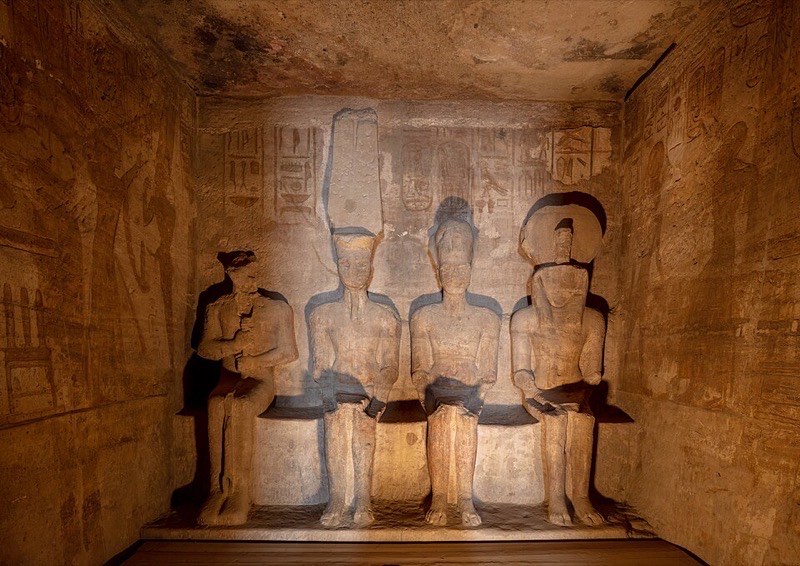
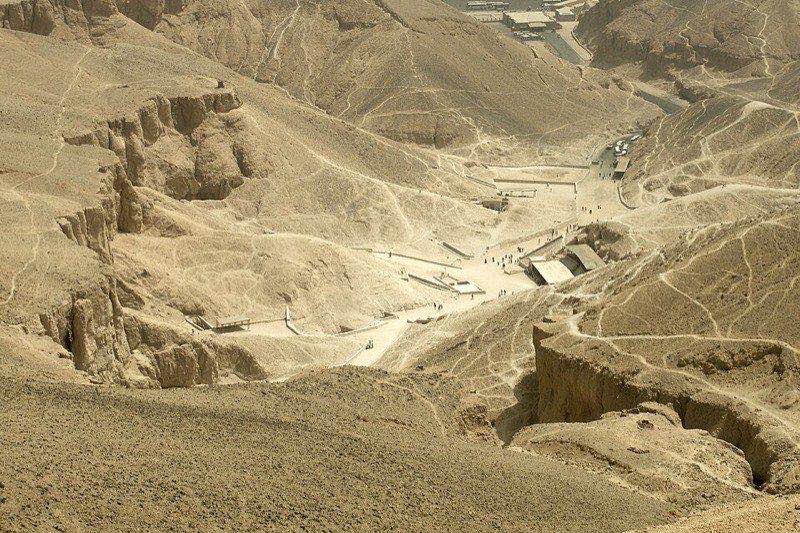
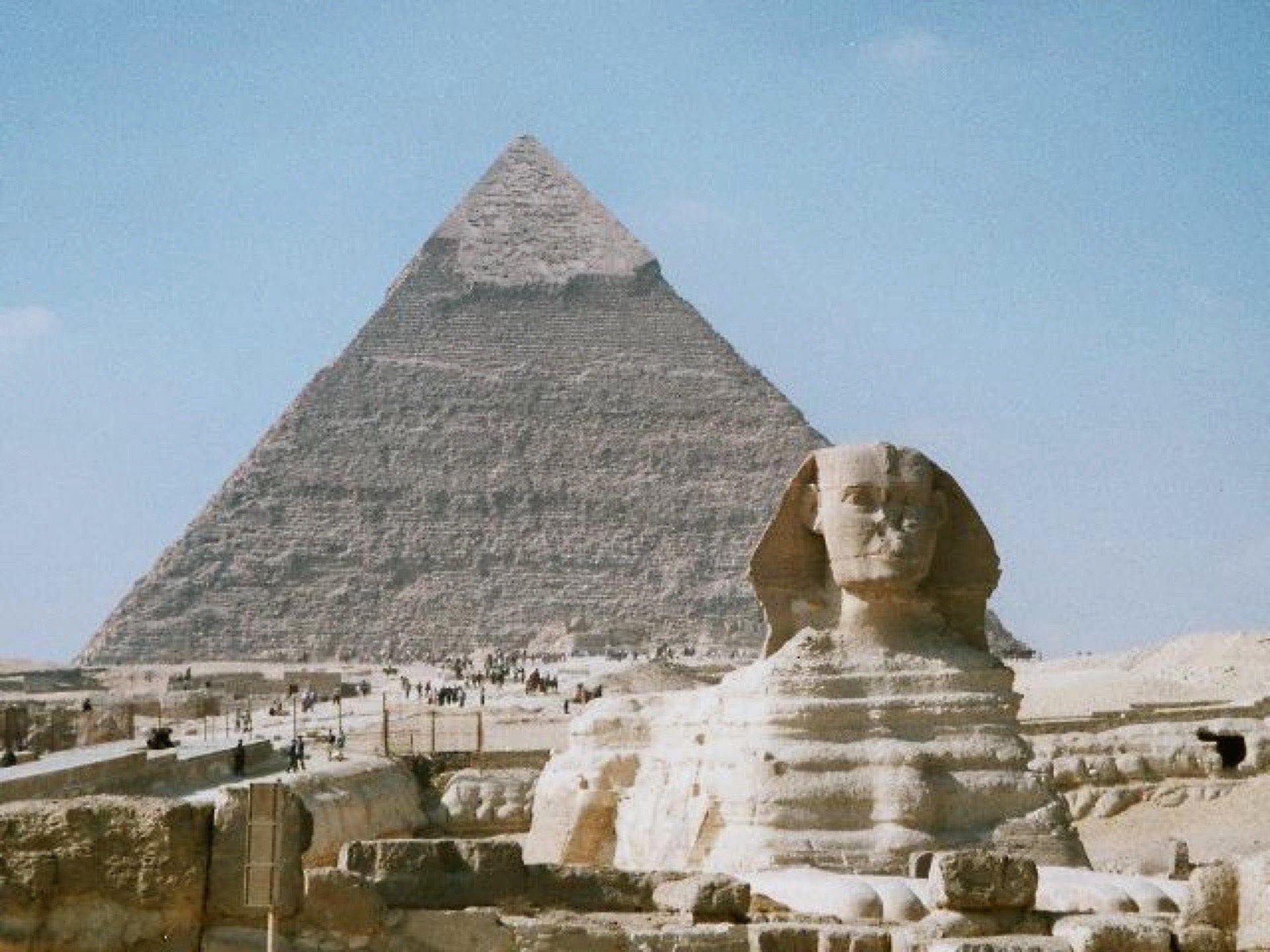
This guide covers the major heritage sites between Cairo and Abu Simbel in geographical sequence, with particular attention to the sites most frequently overlooked in favour of the Giza-Luxor-Abu Simbel triangle. For the headline attractions, see our dedicated pages on the Giza Plateau, Luxor Temples, Valley of the Kings, and Abu Simbel.

The Nile river valley seen from above showing the narrow green corridor between desert cliffs

Heritage Corridor

Key Sites from Cairo to Aswan

These six sites represent the most accessible and historically significant heritage destinations along the Nile corridor that fall outside the standard tourist itinerary. Each is reachable on a day trip or as part of an intercity journey.

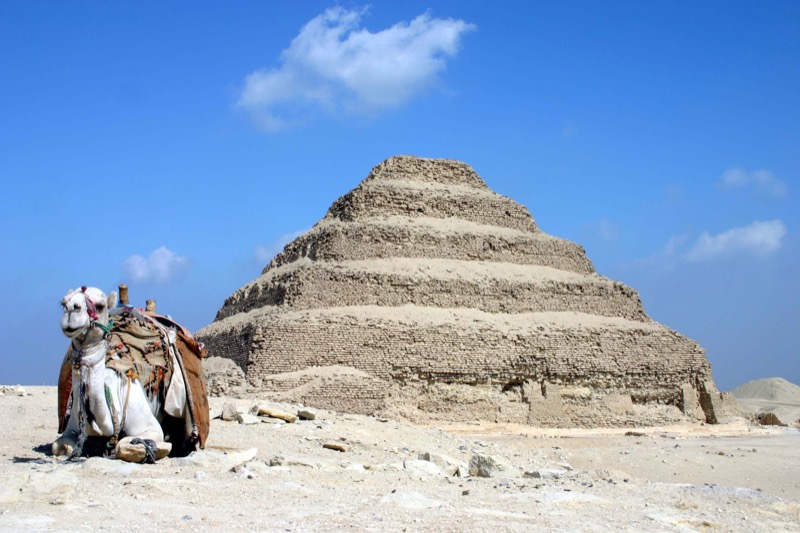
The stepped pyramid of Djoser at Saqqara against a blue sky

Giza Governorate — 30 km south of Cairo

Memphis and Saqqara

Memphis was Egypt's administrative capital for much of the Old and Middle Kingdom periods. The site itself is now largely buried beneath agricultural land and the village of Mit Rahina, but the open-air museum at Mit Rahina preserves a colossal limestone statue of Ramesses II and the alabaster sphinx of Amenhotep II. Saqqara, Memphis's necropolis, contains the world's oldest large-scale stone monument: the Step Pyramid of Djoser (c. 2650 BCE), designed by Imhotep, the first recorded architect in human history. The surrounding complex — the largest of any pyramid site in Egypt — includes the Serapeum (bull-burial catacombs, some accessible by permit), mastaba tombs of Old Kingdom officials with exceptional wall reliefs, and several newly excavated shafts opened in 2023–24 containing Late Period mummies. Entry to the Step Pyramid itself (restoration work permitting) and the Serapeum require separate supplementary tickets.

See the Giza Plateau guide for Saqqara logistics

Columns of the Temple of Seti I at Abydos with relief carvings

Sohag Governorate — 160 km north of Luxor

Abydos — Temple of Seti I

Abydos is one of the most sacred sites in ancient Egypt — the mythological burial place of Osiris, god of the dead, and the destination of an annual pilgrimage throughout the dynastic period. The principal monument is the mortuary temple of Seti I (completed by Ramesses II, c. 1279 BCE), which contains some of the finest painted relief work in any Egyptian building still standing. The colours — deep reds, blue-greens, and blacks — retain extraordinary freshness in several chambers. The Abydos King List, a continuous roster of 76 pharaohs from Menes (first king of the First Dynasty) to Seti I himself, is carved into the temple corridor and is one of the most important chronological documents in Egyptology. The temple is visited by relatively few independent travellers; morning light is exceptional. Abydos is reached from Luxor in approximately two and a half hours by road or by taking the express train north to Balyana station followed by a taxi.

Continue south to Luxor
The Hathor temple at Dendera with its distinctive hypostyle hall columns

Qena Governorate — 60 km north of Luxor

Dendera — Temple of Hathor

The Temple of Hathor at Dendera is one of the best-preserved cult temples in Egypt, largely because it was buried to its roofline by sand for much of the medieval period and only fully excavated in the twentieth century. Built primarily during the Ptolemaic and early Roman Imperial period (c. 54 BCE–68 CE), it represents the last major phase of ancient Egyptian temple construction. The carved reliefs and inscriptions, including the famous Dendera Zodiac (a circular star chart now displayed in the Louvre — a plaster cast remains in situ), are extraordinarily detailed. The roof provides an unobstructed view across the Nile floodplain. Dendera is easily combined with Abydos on a single-day trip from Luxor, with a round-trip road distance of approximately 240 kilometres. Independent access is straightforward; a local taxi can be hired for the round trip.

Read transport tips in the Visitor Essentials guide
Temple of Edfu pylon seen from the Nile bank with the town beyond

Aswan Governorate — 105 km south of Luxor

Edfu — Temple of Horus

The Temple of Horus at Edfu (Apollinopolis Magna in the Greek geographical tradition) is the most completely preserved major temple in Egypt and arguably in the entire ancient world. Construction began under Ptolemy III in 237 BCE and was completed under Ptolemy XII in 57 BCE — a 180-year building programme that produced a structure 137 metres long with a 36-metre-tall entrance pylon. Its preservation results partly from the same factor as Dendera: deep sand burial until the mid-nineteenth century. The interior texts, totalling approximately 400 metres of wall surface, describe the theology, rituals, and astronomical observations of the Horus cult in more detail than any comparable site. Edfu lies directly on the Nile cruise route between Luxor and Aswan; river travellers stop here as a standard itinerary point. Overland visitors from Luxor reach it in under two hours by the Luxor–Aswan highway.

Continue south to Abu Simbel
The Temple of Kom Ombo on the Nile bank with its distinctive double sanctuary layout

Aswan Governorate — 45 km north of Aswan

Kom Ombo — The Double Temple

The Temple of Kom Ombo is architecturally unique among Egyptian temples: it is a completely symmetrical double sanctuary, with the left-hand axis dedicated to the crocodile god Sobek and the right-hand axis to the falcon god Haroeris (Horus the Elder). Each sanctuary has its own hypostyle hall, antechamber, and sanctuary room. The temple's outer wall carries one of the most discussed reliefs in Egyptology — a row of what appear to be medical and surgical instruments, including what some scholars identify as scalpels, forceps, bone saws, and dental tools, carved into a dedication panel for the god Horus in his healer aspect. The on-site Crocodile Museum houses mummified crocodiles excavated from the temple precinct's sacred animal catacombs. Kom Ombo is accessible from Aswan in forty-five minutes by road or by joining a day-cruise segment from Aswan that stops here.

Planning multi-site days: visitor essentials
Philae Temple on Agilkia Island in Lake Nasser viewed from a boat

Aswan Governorate — Agilkia Island, Lake Nasser

Philae — Temple of Isis

The Temple of Isis at Philae was the last functioning temple of ancient Egyptian religion, with recorded worship continuing there until the early sixth century CE — some four centuries after Christianity had become the official religion of the Roman Empire. The original island of Philae was submerged by the first Aswan Dam in 1902 (partially) and again by the High Dam from 1970 onward. In a second major UNESCO rescue operation (after Abu Simbel), the entire temple complex was dismantled block by block and reassembled on the adjacent higher island of Agilkia between 1972 and 1980. Access is by motorboat from Shellal Quay, 2 kilometres south of the old Aswan Dam. The site is visited year-round; the sound-and-light show offered three evenings per week gives the island and temple an entirely different atmosphere under artificial illumination, and is worth experiencing independently of the daytime visit.

Philae artefacts in Cairo's museum collections

Getting Around

Travelling the Nile Corridor

The Nile heritage corridor is served by multiple transport options, ranging from a comfortable overnight train to intercity river cruises. The right choice depends on your pace, budget, and which sites you prioritise.

Train — Cairo to Luxor and Aswan

Egyptian National Railways operates overnight sleeper trains on the Cairo–Luxor–Aswan route that foreign nationals are required to use (day express services on this route are restricted to Egyptian citizens and residents under regulations last updated in 2023). The Watania Sleeper Train departs Cairo Ramses Station at approximately 20:00, arriving Luxor at around 06:00 and Aswan at 10:30. A two-berth cabin with private washroom costs approximately USD 80–100 per person return. Booking at least ten to fourteen days in advance is recommended. The train passes through Sohag (for Abydos) and Qena (for Dendera) — station stops of 15–20 minutes allow a brief walk outside but are not long enough for site visits.

Road — independent vehicles and private taxis

The Luxor–Aswan highway (and its counterpart north of Luxor toward Cairo) is in good condition and well-signposted. A private driver chartered from Luxor for a multi-site day covering Edfu and Kom Ombo typically costs 600–900 EGP for the vehicle. For the Abydos–Dendera loop from Luxor, expect to pay 700–1,000 EGP for an all-day private car. Road convoys — once mandatory for foreign tourists in Upper Egypt — have been abolished for the standard Nile Valley route; convoys remain in use for certain desert tracks and remote areas. Independent travellers may drive their own hire car on the main Nile corridor road without restriction.

Nile cruise — Luxor to Aswan

The four-night, five-day Luxor–Aswan cruise is one of Egypt's classic heritage experiences, covering Karnak, Luxor Temple, the Valley of the Kings (by road from the river), Edfu, Kom Ombo, and Aswan with included excursions. Cruise ships depart in both directions daily during the main season (October through April). It is worth noting that the cruise route does not pass through the Nile Valley between Aswan and Abu Simbel — that stretch is occupied by Lake Nasser, which requires a separate lake cruise or road and air transfer. For the Aswan–Abu Simbel segment, see our Abu Simbel guide.

Seasonal considerations

The Nile Valley's heritage sites are accessible year-round, but summer (June through August) brings temperatures of 40–46°C in Upper Egypt. Open-air sites like Abydos, Dendera, and Edfu are physically difficult in these conditions without very early morning starts. The cruise season effectively runs October through April. Ramadan (dates vary; in 2026, approximately late February through late March) affects site opening hours at some governorate-operated locations — verify schedules through Egypt Pass before travel. The Nile's natural appearance has changed since the High Dam ended the annual inundation in 1970; the floodplain now produces multiple crops per year under permanent irrigation, which means the green agricultural landscape is visible in any season.

Historical Reference

Nile Corridor Sites by Period

Site Period Approx. Date Key Feature
Saqqara — Step Pyramid 3rd Dynasty c. 2650 BCE World's oldest large stone structure
Abydos — Temple of Seti I 19th Dynasty c. 1290–1279 BCE Finest painted relief of the New Kingdom
Luxor and Karnak New Kingdom (various) c. 1550–1070 BCE Largest temple complex in Egypt
Valley of the Kings New Kingdom c. 1504–1070 BCE 63 royal tombs, 22 open to visitors
Dendera — Temple of Hathor Ptolemaic/Roman c. 54 BCE–68 CE Best-preserved Ptolemaic temple; Dendera Zodiac
Edfu — Temple of Horus Ptolemaic 237–57 BCE Most completely preserved major temple in Egypt
Kom Ombo Ptolemaic/Roman c. 180 BCE–80 CE Unique double-sanctuary, crocodile catacombs
Philae — Temple of Isis Ptolemaic/Roman c. 380 BCE–CE 400 Last active ancient Egyptian religious site
Abu Simbel 19th Dynasty c. 1264–1244 BCE Solar alignment temples, UNESCO relocation

Plan Your Corridor

Explore Egypt Beyond the Headline Sites

Egypt Pass can help you build a Nile corridor itinerary that moves beyond the Giza–Luxor–Abu Simbel triangle. Our researcher network covers Abydos, Dendera, Edfu, Kom Ombo, and Philae with the same level of verified detail as the headline attractions. Members receive current entry information, transport logistics, and a proposed multi-day route with realistic time allocations.