Cairo & Giza Governorates

Cairo Museum Guide

Cairo hosts two of the world's most significant collections of ancient Egyptian artefacts within fifteen kilometres of each other. The Grand Egyptian Museum at Giza opened its final galleries in 2024 and now houses more than 100,000 objects; the Egyptian Antiquities Museum on Tahrir Square has served as Egypt's national repository since 1902. Understanding which collection to prioritise — and how to combine both — determines the quality of your Cairo visit.

Opened 2024

The Grand Egyptian Museum

The Grand Egyptian Museum (GEM), situated at the foot of the Giza Plateau and visible from the Pyramids, is the largest archaeological museum in the world by floor area — approximately 480,000 square metres of total site, with 45,000 square metres of exhibition galleries. Construction began in 2002 and proceeded in phased openings; the final galleries, including the complete Tutankhamun collection across three dedicated floors, opened to the public in November 2024.

The museum's holdings include some 100,300 objects drawn from the Egyptian Museum's reserves, Luxor Museum loans, and previously unstudied excavation material from storerooms across Egypt. Many of these objects have never been publicly displayed before. The curatorial approach emphasises thematic organisation — visitors move through galleries arranged by period and theme rather than a simple chronological march through dynasties, which makes repeat visits yield different emphases.

The centrepiece is the Tutankhamun collection. For the first time in history, all 5,398 objects recovered from KV62 by Howard Carter between 1922 and 1932 are displayed together in a single museum. The golden death mask, the four guardian statues that stood at the corners of his gilded shrine, the ritual couches, the canopic chest, and Tutankhamun's two foetal mummies (displayed with full scientific context) are presented across three specially designed galleries on consecutive levels. The route is one-way and takes between two and four hours depending on how carefully you read the interpretive panels.

Beyond the Tutankhamun halls, the GEM's highlights include the Royal Statues Gallery — a corridor 28 metres wide containing 87 colossal royal statues including a 13-metre quartzite colossus of Ramesses II moved from Memphis — and the Children's Museum, an interactive chronological installation designed for ages six to sixteen that is notably rigorous by international museum standards. The photography policy is generous: personal photography without flash is permitted in virtually all galleries. Tripods and professional camera equipment require a separate permit booked through the GEM website.

Ticket pricing for 2026: International adults pay 700 EGP for general admission. The Tutankhamun galleries are included in the standard ticket. An optional IMAX film screening in the museum's dedicated theatre costs an additional 200 EGP and covers the story of the GEM's construction and the Tutankhamun discovery. Timed-entry slots are issued in 90-minute increments beginning at 09:00; the last entry is at 17:00, with the museum closing at 19:00. Tickets sell out routinely during October through April — booking three to five days in advance through the official GEM portal (in Arabic; our guide page includes annotated screenshots) is the reliable approach.

Grand Egyptian Museum exterior plaza at Giza with the pyramids visible behind

What Not to Miss

Grand Egyptian Museum — Essential Galleries

A comprehensive GEM visit requires a full day. If your schedule allows only three to four hours, these are the galleries that merit absolute priority.

Golden death mask of Tutankhamun in the GEM Tutankhamun galleries

Level 2–4, Tutankhamun Wing

The Complete Tutankhamun Collection

All 5,398 objects from KV62 are presented across three sequential floors. Begin at Level 2 with the outer shrines and ritual furniture, proceed to Level 3 for the golden mask, jewellery, and personal objects, and finish at Level 4 with the chariots, bows, and military equipment. Allow a minimum of 90 minutes here; two hours is comfortable. Audio guides covering the Tutankhamun galleries are available in twelve languages and are worth the additional 100 EGP cost for the interpretive depth they add to objects that otherwise appear decorative without context.

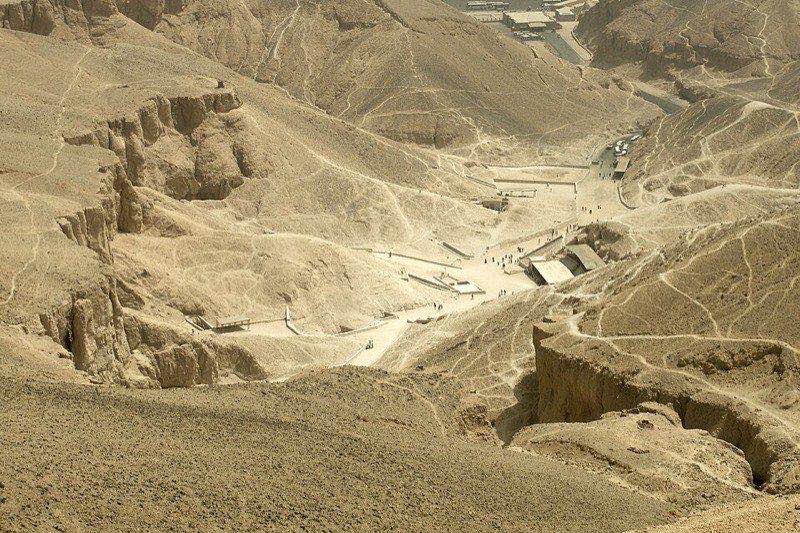
Tutankhamun's tomb at the Valley of the Kings
Colossal royal statue corridor in the Grand Egyptian Museum

Ground Level, Great Staircase

Royal Statues Gallery

The museum's most architecturally dramatic space: a 28-metre-wide staircase atrium flanked by 87 colossal royal statues arranged in chronological order from the Old Kingdom through the Late Period. The 13-metre quartzite Ramesses II colossus — moved from Memphis — dominates the space and is the most photographed object in the museum. The gallery is accessible on the standard ticket and is also the principal thoroughfare between museum zones, so you will pass through it at least twice. Plan for a dedicated stop on your first pass rather than hurrying through on the way to another gallery.

Visit the Giza Plateau next door
Old Kingdom galleries at the Grand Egyptian Museum with ancient relief panels

Level 1, Early Dynasties Wing

Old and Middle Kingdom Galleries

These galleries are the least crowded section of the GEM and arguably the most academically significant. Old Kingdom material (Dynasties 3 through 8, circa 2686–2160 BCE) includes tomb relief panels from Saqqara mastabas, the Seated Scribe from Saqqara (one of ancient Egypt's most technically accomplished sculptures), and a series of intact canopic jars with their original organic contents preserved. The Middle Kingdom section covers the Theban reunification period and includes objects from Deir el-Bahari that have not been on display since the 1970s. Both wings are typically quiet by 11:00, making them ideal to visit while the Tutankhamun galleries are at peak density.

Explore the broader Nile Valley heritage
The neoclassical facade of the Egyptian Antiquities Museum on Tahrir Square, Cairo

Est. 1902

The Egyptian Antiquities Museum, Tahrir Square

The Egyptian Museum on Tahrir Square — often called the Cairo Museum or the Egyptian Antiquities Museum (EAM) — is the older and in some respects the more atmospheric of Cairo's two major collections. The neoclassical pink building was designed by Marcel Dourgnon and opened in November 1902; it has operated continuously ever since, surviving two world wars, the 1952 revolution, and the 2011 uprising (during which the building was briefly entered by crowds, though no collection damage occurred).

Since the GEM's opening, the EAM has repositioned as a specialist institution rather than a general overview museum. The Tutankhamun headline artefacts have transferred to Giza, but the EAM retains a vast holding that remains essential for serious students of ancient Egypt. The Royal Mummy Room contains 22 royal mummies including Ramesses II (identified definitively by DNA analysis in 2021), Seti I, Thutmose III, Hatshepsut, and Merenptah. Admission to the mummy room requires a separate ticket (500 EGP for international adults), purchased at the ground-floor desk before ascending. Photography inside the mummy room is prohibited; phone storage must be in your bag.

The EAM's ground floor is organised geographically and by material type — papyri, jewellery, Middle Kingdom wooden models, Ptolemaic bronzes, and Coptic transitional material are all represented in depth that the GEM's broader thematic approach does not replicate. The statuary collection on the ground floor, which could not be transferred due to weight and fragility, remains extraordinary — including the pair statues of Rahotep and Nofret, the Menkaure Triads, and the Old Kingdom painted limestone bust known as the Reserve Head from Giza.

Practical details: The EAM opens at 09:00 and closes at 17:00 daily (last entry 16:30). International adult admission is 450 EGP, plus the separate mummy room supplement. The museum does not currently operate an online booking system — tickets are purchased at the door. Queues at the entrance are manageable except on Friday afternoons and Egyptian public holidays. The museum's air conditioning is effective in the ground-floor galleries but less reliable on the upper floors during July and August.

Side by Side

GEM vs Egyptian Antiquities Museum — At a Glance

Both museums are worthwhile. The question is sequencing and time allocation. This table covers the key practical differences for first-time and returning visitors.

Criterion Grand Egyptian Museum (GEM) Egyptian Antiquities Museum (EAM)
Location Giza Plateau edge, 32 km from central Cairo Tahrir Square, central Cairo
Adult entry (international) 700 EGP (Tutankhamun included) 450 EGP + 500 EGP mummy room
Pre-booking required Yes — timed entry, books out 3–5 days ahead No — tickets at the door
Opening hours 09:00–19:00 (last entry 17:00) 09:00–17:00 (last entry 16:30)
Photography Permitted, no flash; tripod needs permit Permitted in most galleries; mummy room prohibited
Time needed Half day minimum; full day recommended 3–4 hours; mummy room adds 1 hour
Best for Tutankhamun, Royal Statues, first-time visitors Royal mummies, papyri, specialist depth

Before You Go

Practical Guidance for Both Museums

Getting to the GEM from Cairo

The GEM has no direct metro connection. From central Cairo, the most reliable approach is a pre-agreed taxi (350–500 EGP each way from Zamalek or Downtown) or the museum's shuttle bus service, which operates from the Marriott Mena House and from the Giza metro terminus. Journey time from Tahrir varies: 40 minutes with no traffic, 90 minutes in peak hours. Plan for traffic, particularly on outward journeys after 15:00. Rideshare apps (Uber, Careem) are usable but often surge-price during busy periods at the Giza Plateau.

Combining both in one day

It is possible but requires discipline. Our recommended sequence: EAM at 09:00 (opening, before queues build), spend two to three hours including the mummy room, then travel to Giza for a 13:00 GEM entry slot. You will have until 19:00 at the GEM. This sequence avoids the EAM's afternoon heat and leaves the GEM's closing hours — which are often less crowded than mid-morning — for the Tutankhamun galleries. Pack water, comfortable shoes, and lunch. The GEM has a food court and café on site; the EAM's in-house café is functional but not recommended for a full meal.

Audio guides and official apps

Both museums offer audio guides for rent at their entrances (100 EGP, available in Arabic, English, French, German, Spanish, Italian, Japanese, and Chinese). The GEM has an official companion app (available on iOS and Android) that works offline inside the museum; download it before your visit as in-museum Wi-Fi is inconsistent. The app includes detailed object descriptions for the Tutankhamun galleries written by Zahi Hawass's team and cross-references the Carter excavation notes, which adds considerable depth. The EAM has no equivalent app as of 2026; the audio guide is the best interpretive tool.

Accessibility at both venues

The GEM was designed with universal accessibility as a core requirement. All galleries are wheelchair accessible; lifts serve every floor; tactile maps are available at the information desk; and the museum's toilet facilities are the best in any Egyptian heritage institution. The EAM is substantially less accessible — the upper floor has no lift and several threshold steps; the ground floor is generally manageable with a standard wheelchair. Egypt Pass can advise on specific accessibility requirements for either venue, including arrangement of prioritised entry for visitors with limited mobility.

Common Questions

Museum Visits — Frequently Asked

The golden death mask is now permanently at the Grand Egyptian Museum in Giza. It transferred as part of the 2024 final opening of the Tutankhamun galleries. The Egyptian Antiquities Museum on Tahrir Square retains a number of other Tutankhamun objects in its galleries, but the mask, the mummy itself, the sarcophagi, and the shrine set are all at the GEM.

Walk-in tickets are technically available at the GEM's on-site box office if a time slot has remaining capacity. In practice, during October through April, most slots sell out online before the museum opens. The safest approach is to book a specific entry slot via the GEM's official online portal at least three to five days in advance. Walk-ins have a better chance in May through September (lower tourist volume) and on Tuesday and Wednesday mornings.

Both museums offer reduced admission for children. At the GEM, children aged six to seventeen pay 350 EGP (half the adult rate); children under six are free. At the EAM, children under twelve are free; students with valid international student cards (ISIC) receive a 30 per cent discount on the general admission (not the mummy room supplement). Egyptian nationals pay a separate, substantially lower rate at both venues, payable in EGP only.

Standard backpacks and day bags pass through the GEM's X-ray security system at the entrance. Bags with tripods, selfie sticks (with detachable ring lights), or large DSLR setups may be held at the entrance storage desk if staff consider them professional camera equipment — the line between tourist and professional camera gear is applied inconsistently. The safest approach is to carry a compact camera or smartphone and leave specialist kit in hotel storage. Sealed water bottles are permitted; food is not.

The GEM and the Giza Plateau are immediately adjacent. The museum's main entrance faces south toward the pyramids, which are visible from the GEM's rooftop terrace. The Giza Plateau's northern visitor gate is approximately 800 metres from the GEM entrance — a walkable distance in cooler months, though the site road is not fully pedestrianised. A free shuttle connects the GEM entrance plaza to the Giza site gate on a 15-minute loop. Combining a GEM morning with an afternoon on the Giza Plateau is a logical and popular itinerary. See our Giza Plateau guide for entry timings and site strategy.

Plan Ahead

Make the Most of Your Cairo Museum Days

Egypt Pass Scholar and Expedition members receive pre-printed GEM booking confirmations, a translated step-by-step ticketing guide for the GEM Arabic portal, and direct advisor support for mummy room access at the EAM. Our team can also arrange group entry for academic and research parties with reduced waiting times. Contact us to discuss your Cairo itinerary.