Orientation
Thebes: City of 100 Gates
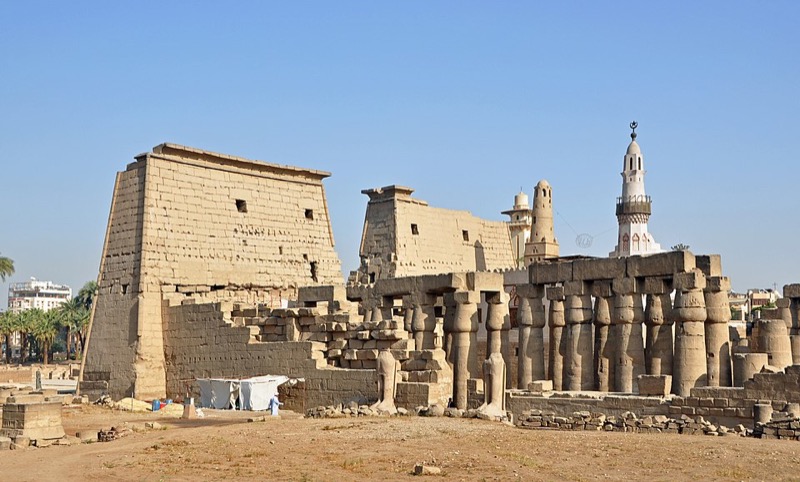
Modern Luxor sits on the site of ancient Waset — Thebes — the capital of Egypt
during the New Kingdom (approximately 1550–1070 BCE) and one of the most
powerful cities of the ancient world. Homer described it as the "city of 100
gates", alluding to the sheer number of temple pylons whose silhouettes
dominated the Nile floodplain. That density of monumental architecture is still
visible today: two major temple complexes on the East Bank, a vast necropolis
and dozens of royal and private tombs on the West Bank, and the Luxor Museum
holding artefacts from centuries of excavation.
Luxor is reached by domestic flight from Cairo (approximately 80 minutes, with
multiple daily services from Cairo International), by overnight train on the
Cairo–Aswan line (about 10–11 hours; first-class sleeper recommended), or as part
of a Nile cruise itinerary — typically Luxor north, Aswan south, or the reverse.
The city itself is compact and navigable by bicycle, horse carriage (calèche),
or the growing network of electric tuk-tuks. Most East Bank temple sites are
within 3 kilometres of the central Luxor corniche.
October through February represents the ideal visiting window: temperatures range
from 20°C to 30°C, and the quality of morning light on the sandstone temple faces
— particularly at Karnak at first opening — is extraordinary. The Luxor
International Hot Air Balloon flights, which operate year-round at dawn, are
most reliable in autumn and winter when wind conditions are more predictable.