Field Guide

The Giza Plateau

Three royal pyramids, the Great Sphinx, a boat museum, and one of the oldest tourist bureaucracies on Earth — navigated clearly, step by step.

Overview

Why Giza Demands More Than One Morning

The Giza Plateau sits on the western bank of the Nile, roughly 15 kilometres south-west of central Cairo. It is Egypt's most-visited archaeological zone and, predictably, the one most prone to crowd congestion, aggressive vendor pressure, and rapidly shifting access rules. The three main pyramids — Khufu (Cheops), Khafre, and Menkaure — were constructed between approximately 2580 BCE and 2510 BCE during the Fourth Dynasty of the Old Kingdom. Together with the Great Sphinx and the associated valley temples, they form a funerary complex that has shaped the imagination of the Western world for three millennia.

A single rushed morning visit rarely does justice to this landscape. The plateau spans roughly 2.5 square kilometres of limestone desert, with satellite pyramids, queens' tombs, mastabas, and the restored Solar Boat of Khufu adding considerable depth beyond the postcard view. Visitors who allocate a full day — arriving at opening time, revisiting the Sphinx enclosure at midday when tour groups thin, and ending with the Khufu Boat Museum before the 17:00 close — consistently report a far more rewarding experience.

The September-to-November period offers the most comfortable temperatures for extended outdoor exploration: midday highs typically range from 25°C to 32°C rather than the 38°C–42°C peaks of June through August. Early morning light between 07:00 and 09:00 also produces the most dramatic photographic conditions, with long shadows across the pyramid faces and relatively thin crowds at the eastern approach.

The Great Pyramid of Khufu at Giza seen from the desert plateau

Access & Tickets

Entry Fees and Site Hours (2026)

The Giza plateau operates a layered ticket system. Each pyramid interior, the Sphinx enclosure, and the Khufu Boat Museum each require a separate admission payment on top of the general plateau entry.

Ticket Adult (foreign) Student (foreign) Hours Notes
General Plateau Entry 450 EGP 225 EGP 07:00 – 17:00 daily Required for all visitors
Great Pyramid (Khufu) Interior 800 EGP 400 EGP 09:00 – 16:00 Limited to 300 visitors per day; sell out early
Khafre Pyramid Interior 350 EGP 175 EGP 09:00 – 16:00 Less congested than Khufu; larger burial chamber
Menkaure Pyramid Interior 200 EGP 100 EGP 09:00 – 16:00 Smallest of the three; accessible to most fitness levels
Great Sphinx Enclosure Included in plateau Included 07:00 – 17:00 Access to base level; no interior entry
Khufu Boat Museum 150 EGP 75 EGP 09:00 – 17:00 Air-conditioned; closed Tuesdays in off-season
Valley Temple of Khafre Included in plateau Included 07:00 – 17:00 Adjacent to Sphinx enclosure; pink Aswan granite interior

Practical note on the Great Pyramid interior ticket

The 300-daily-visitor cap on the Khufu interior is strictly enforced. Tickets for the first session (09:00 entry) are typically exhausted by 07:30 when the main gate opens. Egypt Pass Scholar and Expedition members receive priority access facilitation as part of their membership, allowing pre-visit ticket reservation. If you are visiting independently, arrive at the ticket office no later than 07:15.

The Monuments

The Three Royal Pyramids in Detail

Each pyramid has a distinct character, scale, and interior experience. Understanding what you are looking at transforms a walk across limestone rubble into something genuinely absorbing.

The Great Pyramid of Khufu at sunrise over the Giza Plateau

2580 BCE

The Great Pyramid of Khufu

Originally 146.5 metres tall and still reaching 138.8 metres, Khufu's pyramid is the largest stone structure ever built and the only surviving Wonder of the Ancient World. Its interior passage system — the Ascending Corridor, Grand Gallery (47 metres long, 8.5 metres high), and King's Chamber in red Aswan granite — is extraordinary in its engineering precision. The narrow entrance shaft requires visitors to climb in a semi-crouched position; those with claustrophobia or mobility limitations should consider this before purchasing the interior ticket. Air quality inside is regulated by ventilation shafts discovered in 1993, though the atmosphere remains warm and humid during peak visitor hours.

Arrange interior access
Pyramid of Khafre with its original limestone casing at the apex

2570 BCE

The Pyramid of Khafre

Khafre's pyramid appears taller than Khufu's because it was built on higher ground — in fact it stands 136.4 metres to the Great Pyramid's 138.8. The distinctive Tura limestone casing still intact at the apex is the most visible reminder of how all three pyramids once appeared: sheathed in smooth white limestone reflecting the desert sun. The interior descending corridor leads to a horizontal passage and the burial chamber, which retains Khafre's red granite sarcophagus (lid broken in antiquity). Crucially, the Khafre complex includes the Valley Temple — one of the best-preserved Old Kingdom structures in Egypt — and direct access to the Great Sphinx enclosure via a paved causeway that pilgrims and priests walked four and a half thousand years ago.

Compare royal tombs
Pyramid of Menkaure, the smallest of the three Giza pyramids

2510 BCE

The Pyramid of Menkaure

At 65 metres, Menkaure's pyramid is one-quarter the volume of Khufu's, yet its interior is proportionally the most visitor-friendly: less congested, less steep, and with genuinely interesting subsidiary chambers. The lower portion of the pyramid's casing was originally clad in red Aswan granite, which can still be seen on the north face. Three satellite pyramids on the south side — likely built for Menkaure's queens — add archaeological texture. The area around Menkaure's pyramid is typically the quietest part of the plateau in the late morning, making it ideal for those who want photography without crowds. The associated mortuary and valley temples, though largely unexcavated, are accessible and reward a slow exploration.

Explore Abu Simbel next

Iconic Monument

The Great Sphinx of Giza

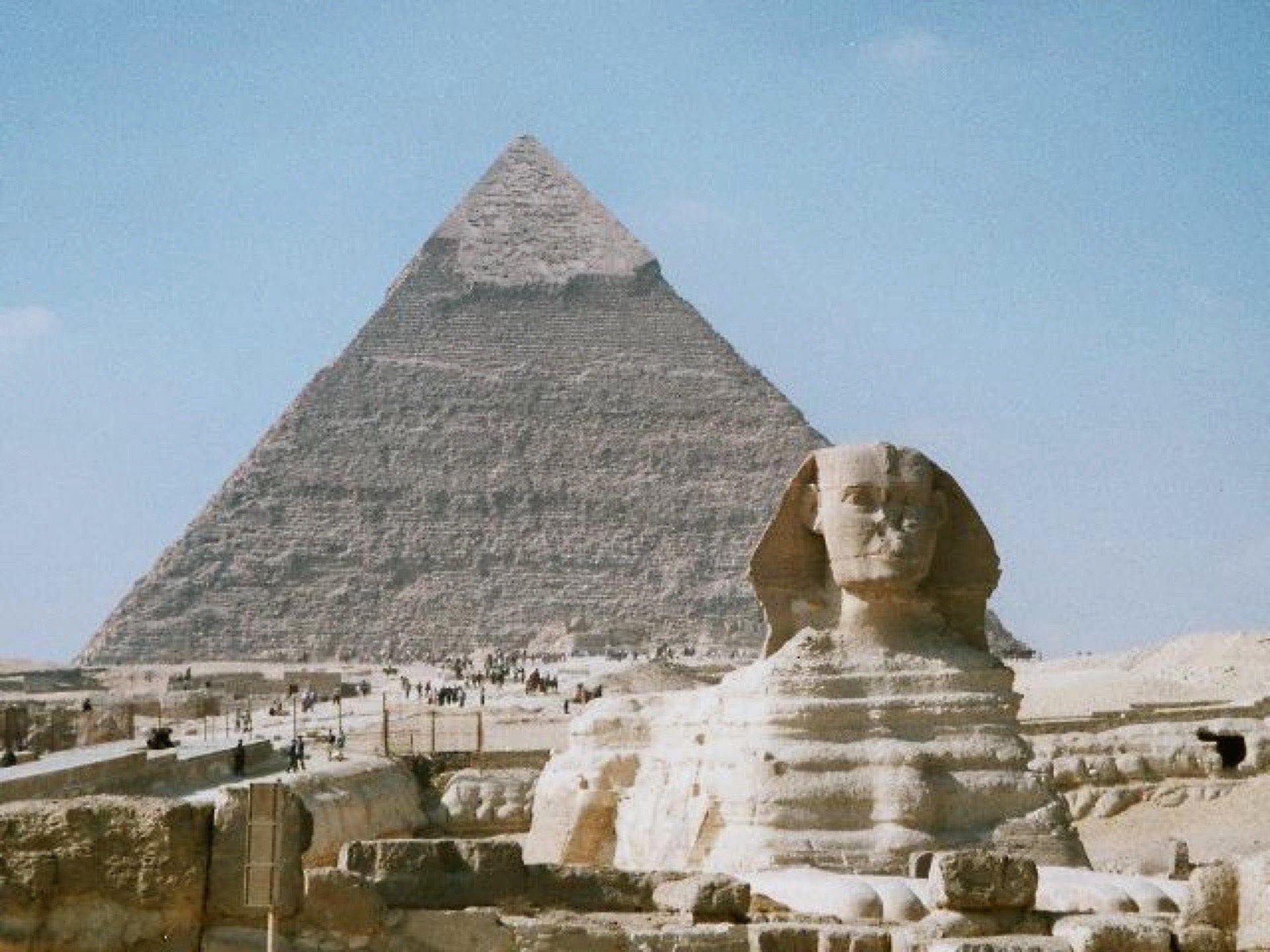
Carved directly from the natural limestone bedrock of the plateau during the reign of Khafre (approximately 2558–2532 BCE), the Great Sphinx is the world's largest monolithic statue: 73 metres long, 20 metres wide, and 20 metres tall. The human-headed lion form — the head bearing the nemes headdress associated with Khafre — served as a guardian of the Khafre pyramid complex and was associated with the sun god Ra-Horakthy.

The statue has suffered substantial erosion over four millennia, primarily from wind-blown sand and, in recent centuries, air pollution. Between 1989 and 1998 the Egyptian Antiquities Organisation undertook a major restoration, replacing deteriorated limestone blocks on the paws and flanks. The "Dream Stele" of Thutmose IV — erected between the paws around 1400 BCE and narrating the god's promise of the kingship to the sleeping prince — is partially legible, though the hieroglyphs require specialist knowledge to read in situ.

Visitor access is to the enclosure surrounding the Sphinx and the base of the monument at ground level. Visitors cannot touch the surface or climb the figure. The best viewing angle for photography is from the eastern face, particularly in the first two hours after opening. The Sphinx Sound and Light Show — held on evenings when the plateau is not closed for special events — can be arranged through the plateau visitor office or through Egypt Pass concierge services.

The Great Sphinx of Giza with the Pyramid of Khafre in the background

On-Site Practicalities

What to Know Before You Arrive

Timing your visit

Arrive at the main eastern gate no later than 07:15 to purchase interior pyramid tickets before the daily cap is reached. Tour groups from Nile cruise ships arrive in force between 09:30 and 11:30; the plateau thins significantly between 13:00 and 15:00 as groups return to their buses for lunch. Late afternoon visits offer long golden light and far fewer people but no interior access after 16:00.

Getting there from Cairo

The Giza Plateau is accessible by Cairo Metro Line 2 (terminus: Giza station, then a 3-4 km taxi or tuk-tuk to the main gate), by taxi directly from central Cairo (approximately 45–70 minutes depending on traffic), or by the newer air-conditioned bus route 357 from Ramses Square. Rideshare apps operating in Cairo (including Uber and local alternatives) are reliable and trackable. Avoid unofficial "tourist minibuses" that may take you to papyrus shops before the site.

Photography rules

External photography of all monuments and the plateau is freely permitted without permit or fee. Interior photography of the Great Pyramid's upper chambers (Grand Gallery and King's Chamber) requires a separate photography permit obtained at the ticket office. Flash photography is prohibited inside all pyramid interiors. Tripods and professional camera equipment require an advance permit from the Supreme Council of Antiquities Media Affairs office — Egypt Pass handles this for Scholar and Expedition members.

Water, food, and shade

Bring at least 1.5 litres of water per person for a morning visit; 2.5 litres is advisable April through October. There are licensed refreshment kiosks at the plateau entrance and near the Sphinx, but prices are elevated and queues long in peak season. The Khufu Boat Museum is fully air-conditioned and makes an excellent midday refuge. The nearest quality restaurant options are in the Nazlet El-Semman village immediately outside the western plateau gate.

Managing vendors and guides

Licensed tour guides within the plateau wear official badges issued by the Ministry of Tourism and Antiquities and can be engaged directly at the site. Unlicensed touts will approach persistently but can be declined firmly without confrontation. Camel and horse rides are available legally through licensed operators at the southern panoramic viewpoint — always agree the price and route explicitly before mounting. Complain operators do not pursue you if you say "la shukran" (no thank you) and keep walking without making eye contact.

Physical demands

Walking the full plateau route (main gate → Khufu → Khafre → Menkaure → panoramic viewpoint → Sphinx → Valley Temple) covers approximately 4.5 kilometres on uneven limestone rubble and sand. Sturdy, closed-toe shoes with ankle support are strongly advised. The Great Pyramid interior climb involves a 47-metre ascending corridor at a 26° incline with a clearance of approximately 1.2 metres — physically demanding in both directions and not suitable for visitors with serious cardiovascular conditions without medical clearance.

Frequently Asked

Giza Plateau Questions

Yes, but you must arrive before the main gate opens. The 300-ticket daily quota for Great Pyramid interior entry is sold at the plateau ticket office from 07:00. On most days between October and April these are exhausted within 90 minutes of opening. In July and August, when general visitor numbers drop due to heat, tickets are sometimes available until mid-morning. Egypt Pass Scholar and Expedition members can reserve interior access in advance via our permit facilitation service.

Yes, the Giza Plateau remains open throughout Ramadan, though hours may be adjusted (typically 09:00–15:00 rather than the usual 07:00–17:00). The Sound and Light Show schedule is often extended during Ramadan evenings to accommodate local visitors. We recommend confirming current hours with our team within a week of your planned visit, as Ramadan timing shifts annually with the Islamic calendar.

The official panoramic viewpoint is located on the western plateau rim, accessible by internal road and on foot via a clearly marked path from the Menkaure pyramid area. From here all three pyramid tops are visible in a single frame. A second, lesser-known elevated vantage is on the south-eastern approach road (Route 4, Al-Fayoum Desert Road direction) — technically outside the paid plateau area and used primarily by photographers and travel journalists seeking a clean horizon line.

Yes. The original Solar Boat of Khufu — discovered disassembled in a sealed rock-cut pit beside the Great Pyramid in 1954 and painstakingly reconstructed from 1,224 cedar planks over a decade — was transferred to the new Grand Egyptian Museum in Giza in 2021. It is now displayed in a climate-controlled gallery there. The original Khufu Boat Museum building adjacent to the Great Pyramid still displays an unrestored second boat (discovered in 1987) and exhibits explaining the reconstruction process. See our Museum Guide for the Grand Egyptian Museum entry details.

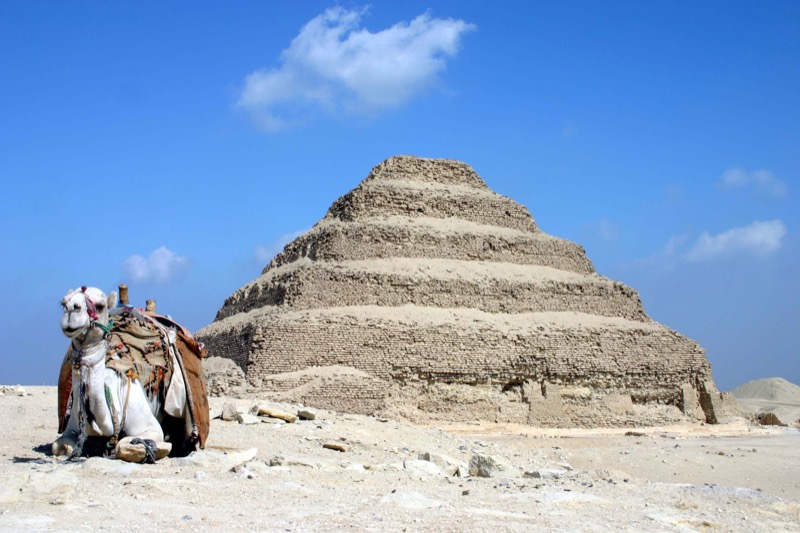
A combined Giza-Saqqara day is very achievable. Finish at the Giza Plateau by noon (if you arrive at 07:00 this is straightforward), then take a taxi or arranged vehicle south approximately 20 kilometres to Saqqara — about 30 minutes without traffic. Saqqara opens at 08:00 and its ticket office closes at 16:00. This gives you a comfortable three-to-four-hour window at the Step Pyramid of Djoser, the Pyramid of Unas, and the mastaba tombs of the Old Kingdom nobles. Egypt Pass can arrange shared private transport for this combined route for Scholar and Expedition members.

Ready to Explore

Plan Your Giza Plateau Visit

Our research team can help you navigate interior access tickets, arrange specialist guided interpretation, or build a multi-day itinerary across the greater Cairo archaeological region. Reach us before you book your flights.